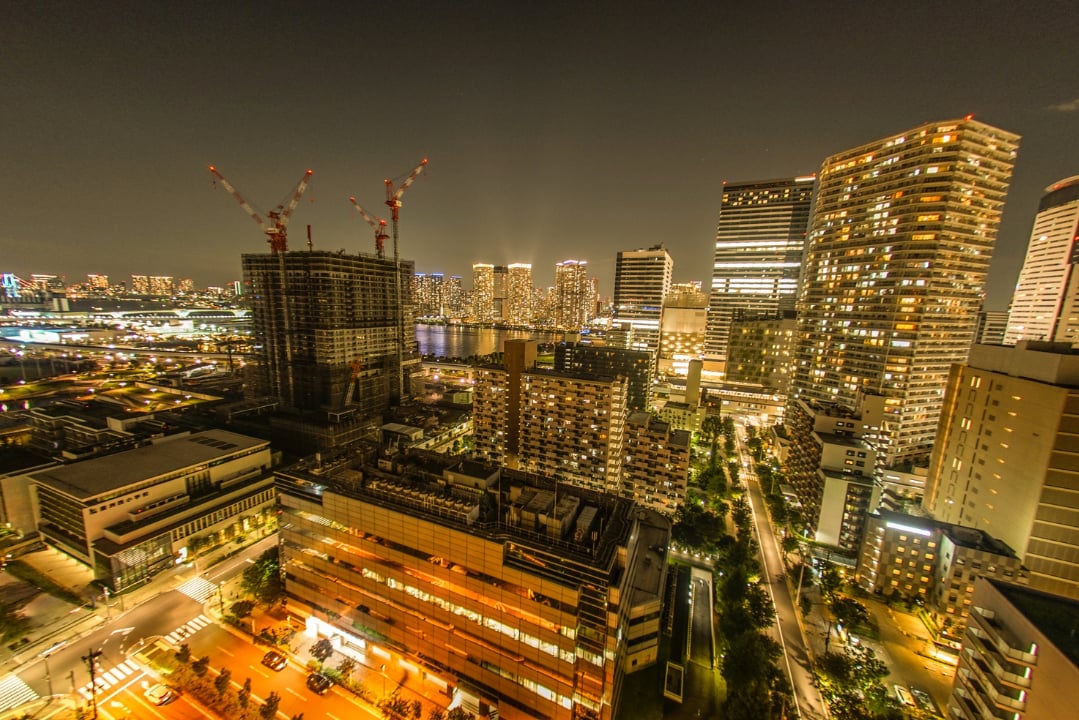
The Power of Infill Development: Building the Future Within Existing Communities
Oliver Thornton November 27, 2025
Oliver Thornton November 27, 2025
The future of Los Angeles won’t be found in untouched hillsides or sprawling suburbs — it will be built from within.
Infill development, the practice of building on underused or vacant parcels within existing communities, is emerging as one of the most responsible and forward-thinking approaches to modern urban growth. For Thornton Development Group (TDG), it’s more than a planning tactic — it’s a philosophy of renewal.
By creating thoughtful spaces within established neighborhoods, TDG is helping Los Angeles evolve sustainably — preserving the character of its communities while meeting the needs of a growing city. Because progress, when done right, doesn’t mean expansion. It means evolution.
Los Angeles faces a defining challenge: balancing growth with livability. Land is limited, housing demand continues to surge, and environmental pressures are intensifying. Traditional development models — pushing outward — are no longer viable.
Infill development offers a smarter alternative. It focuses on building within the existing urban fabric — revitalizing what already exists instead of replacing it.
Every square mile of Los Angeles holds potential — abandoned lots, obsolete buildings, and surface parking can all be reimagined into high-performing residential or mixed-use developments. TDG turns overlooked parcels into architectural assets, efficiently using land and infrastructure already in place.
Building where roads, power, and water lines already exist dramatically reduces environmental strain. It minimizes sprawl, conserves open space, and lowers carbon emissions. For TDG, this isn’t just sustainability — it’s responsibility.
Infill communities naturally support walkability and social connection. By developing within existing neighborhoods, TDG promotes proximity to local shops, schools, and transit — enhancing quality of life while reducing dependency on cars.
Rather than imposing large-scale projects, TDG designs infill developments that harmonize with existing architecture and community identity. The result: growth that feels like a continuation, not a disruption.
Sustainability is not only about energy systems or materials — it’s about mindset.
TDG’s infill philosophy reflects a deep respect for the lifecycle of buildings, the history of place, and the responsibility developers hold in shaping both the physical and social environment.
Some of the firm’s most compelling projects begin not from the ground up, but from the inside out. By transforming underutilized buildings into vibrant residences, TDG preserves cultural fabric while reducing waste — saving as much as 60% of the embodied carbon compared to new construction.
Infill sites often benefit from compact design. TDG integrates solar energy, greywater recycling, and high-efficiency HVAC systems that reduce operational costs and environmental impact, proving that dense doesn’t have to mean resource-intensive.
Infill requires creativity — maximizing livable space while maintaining privacy and comfort. Through strategic orientation, natural light optimization, and biophilic design, TDG creates homes that feel expansive even within compact footprints.
Each project integrates green infrastructure — native landscaping, tree preservation, and rainwater infiltration systems that improve air quality and mitigate urban heat. TDG builds not only for people but for the planet that holds them.
What sets Thornton Development Group apart is not just its commitment to building — but its commitment to belonging.
The firm’s infill model blends design excellence, community understanding, and technical precision to ensure that each project enhances the neighborhood it enters.
Before a single plan is drawn, TDG studies local zoning, infrastructure capacity, and the social rhythm of each community. The result is design that feels contextual, not commercial — homes that fit their surroundings with respect and grace.
TDG engages early with neighborhood groups and city officials to understand local concerns. This proactive communication leads to smoother approvals, stronger trust, and developments that residents welcome.
TDG specializes in boutique-scale projects that bring meaningful change without overwhelming infrastructure. Whether a four-unit infill on a residential street or a multi-family development in a transitional district, each project reflects balance — growth that’s visible but measured.
Every TDG build is an act of renewal. By filling underused gaps with purpose-built homes, the firm revitalizes neighborhoods from within — turning forgotten spaces into functional, inspiring architecture.
When done with care, infill development creates ripples of renewal that extend beyond the property line.
TDG’s projects stimulate local economies by increasing property values, creating construction jobs, and supporting nearby businesses. This localized economic growth benefits existing residents as much as new ones.
Infill developments tend to blend into the social texture of a community. TDG designs homes with human-scale architecture, shared green spaces, and visual transparency — elements that encourage casual interaction and connection.
By leveraging existing public services — roads, sewers, and schools — TDG minimizes the need for costly new infrastructure. This efficient growth model saves municipalities money and reduces urban strain.
Infill allows for varied housing typologies within established areas — from townhomes and duplexes to small-lot subdivisions. TDG’s projects increase access to luxury housing in walkable, desirable neighborhoods without compromising affordability goals citywide.
By redeveloping underused land in already urbanized zones, TDG helps prevent displacement into distant, car-dependent suburbs — supporting more equitable, inclusive access to city living.
While TDG’s portfolio includes hillside estates and ground-up developments, its most forward-looking work lies in urban infill — particularly across areas like Studio City, Sherman Oaks, Venice, and Silver Lake.
On a once-vacant lot, TDG created a small cluster of multi-family residences designed around a central garden. The architecture celebrates California Modern simplicity — clean lines, deep overhangs, and warm natural textures — blending seamlessly with surrounding mid-century homes.
Result: increased property values and new green space for residents.
An outdated duplex was reimagined into two high-performance townhomes featuring sustainable wood cladding, solar panels, and coastal ventilation strategies. The project demonstrates how luxury design can coexist with neighborhood authenticity.
Result: 30% higher energy efficiency and strong community approval.
Replacing an unused commercial parcel, TDG developed compact modern homes around a shared courtyard. The design fosters community connection while maintaining privacy — an architectural metaphor for balance.
Result: sold out within 45 days of completion.
Each project reflects TDG’s principle: refinement without displacement.
Luxury once meant isolation — sprawling lots, private drives, separation from the world. But modern luxury, as TDG defines it, means integration. It’s about connection to place, culture, and sustainability.
TDG’s infill developments demonstrate that density can be dignified. Through design precision and architectural grace, the firm proves that compact living doesn’t have to feel compromised.
Infill homes benefit from established utilities and services, making them more resilient to future policy or environmental shifts. Building within existing frameworks ensures long-term stability for investors and residents alike.
By reducing commute distances, conserving land, and supporting walkability, TDG’s developments lower the carbon footprint of luxury living — turning architectural elegance into environmental intelligence.
Tomorrow’s prestige will not be measured by size, but by sensitivity — to the environment, to culture, to place. TDG’s work embodies this evolution, proving that real luxury builds community, not just property.
Cities don’t expand forever — they refine.
For Thornton Development Group, infill development is not just about filling space; it’s about creating meaning. It’s an opportunity to transform underused land into homes that reflect thought, integrity, and the future of urban living.
Los Angeles doesn’t need more — it needs better. And that’s what TDG builds: projects that elevate the neighborhoods they join, honor the communities they serve, and leave the city more beautiful, resilient, and connected than before.
Because the future of luxury development isn’t found on the edge of the city — it’s built right at its heart.
Stay up to date on the latest real estate trends.
Los Angeles Real Estate
Exploring how Thornton Development Group transforms vision into value — mastering every stage of the development lifecycle with precision and purpose.
Los Angeles Real Estate
Exploring how Thornton Development Group transforms Los Angeles from within — redefining progress through purposeful, community-rooted development.
Los Angeles Real Estate
Exploring how Thornton Development Group turns design excellence into measurable, lasting investment performance.
Los Angeles Real Estate
Exploring how Thornton Development Group builds with purpose — creating spaces that elevate neighborhoods, not erase them.

Los Angeles Real Estate
Exploring how Thornton Development Group designs with insight, honoring the character, rhythm, and realities of Los Angeles communities.
Los Angeles Real Estate
Exploring how Thornton Development Group builds homes that think ahead — designed for resilience, intelligence, and longevity.
Los Angeles Real Estate
Exploring why exceptional construction isn’t an expense — it’s protection.
Los Angeles Real Estate
Exploring how Thornton Development Group transforms engineering precision into an art form — where structure safeguards beauty.
Los Angeles Real Estate
Understanding how evolving codes are reshaping the standards of safety, sustainability, and sophistication in Los Angeles homes.
Etiam non quam lacus suspendisse faucibus interdum. Orci ac auctor augue mauris augue neque. Bibendum at varius vel pharetra. Viverra orci sagittis eu volutpat.